Category: Lifestyle

  • Cold Water Swimming Has Gone Mainstream in Britain, Here’s the Science Behind the Hype

    Cold Water Swimming Has Gone Mainstream in Britain, Here’s the Science Behind the Hype

    Two years ago, jumping into a freezing lake at 7am felt like the kind of thing only slightly unhinged ultramarathon types did for fun. Now half of Britain seems to be doing it. Wild swimming and cold-water dipping have gone from fringe activity to full-blown cultural moment, with outdoor swimming groups popping up everywhere from the Serpentine in Hyde Park to Windermere, Loch Lomond, and the Pembrokeshire coast. I’ve watched the Instagram feeds fill up with gasping, red-faced joy, and I’ll admit, I got curious enough to try it myself. But between the genuine physiological research and the wellness industry’s more ambitious claims, there’s quite a gap. Let’s actually look at what the evidence says about cold water swimming benefits UK swimmers are reportedly experiencing.

    Person wild swimming in a British lake at dawn, illustrating cold water swimming benefits UK
    Photo by Ilia Bronskiy on Pexels

    How did wild swimming blow up so fast?

    The numbers are striking. According to the Swim England outdoor swimming report, participation in open-water swimming grew by over 200% in the five years to 2025, with an estimated 4 million people now swimming outdoors regularly in England alone. Scotland and Wales have seen similar surges. Social media amplified it, lockdowns unlocked it (outdoor exercise was permitted when indoor pools were closed), and a handful of high-profile advocates gave it mainstream credibility. Wim Hof has a lot to answer for.

    The timing also aligned with a broader cultural exhaustion. People were burnt out, screen-addicted, and looking for something that felt genuinely physical and present. Cold water delivers that immediately. You cannot be anywhere else mentally when you hit 10°C water. That involuntary gasp pulls you straight into your body. And that sensation alone, before any biochemistry kicks in, might explain part of the appeal. It’s worth noting how this connects to a wider trend we’ve tracked before, British Gen Z quietly stepping away from social media in search of more embodied, real-world experiences. Wild swimming fits squarely into that shift.

    What the science actually supports

    The physiological response to cold-water immersion is well documented, even if the long-term benefits are still being studied. When you enter cold water, your body triggers the diving reflex: heart rate drops, blood vessels constrict, and blood is redirected towards vital organs. Your stress hormones, particularly noradrenaline and cortisol, spike sharply. That hormetic stress, a small, controlled shock that prompts adaptation, is where a lot of the claimed benefits originate.

    A study from the University of Portsmouth found that regular cold-water swimmers showed measurably higher levels of the protein RBM3, which some researchers associate with neurological resilience. Separate work published in the BMJ Case Reports documented a woman whose depression and anxiety improved significantly after she began weekly cold-water swimming. Researchers were careful to note that this was observational, not causal proof. The mood lift, though, is real enough that the NHS-backed charity Mind has begun incorporating outdoor swimming into some community mental health programmes.

    Close-up of cold water immersion showing the physiological response central to cold water swimming benefits UK
    Photo by Andrea Musto on Pexels

    Cold water also reduces inflammation markers in some studies, and there’s credible evidence for improved circulation and cardiovascular tone in regular practitioners. The recovery angle is legitimate too. Sports physiotherapists have used cold-water immersion for decades to reduce post-exercise muscle soreness and speed up recovery between training sessions. Professional football clubs, rugby teams, and cycling squads all use some form of cold-water therapy as standard. The evidence base there is solid.

    Where the wellness industry overreaches

    Here’s where I’d pump the brakes a little. The leap from “cold water reduces inflammation” to “cold water cures autoimmune conditions” is one the science hasn’t made, even if certain wellness brands have. Claims around dramatic fat loss, immune system transformation, and extended longevity based on cold exposure alone are not supported by robust clinical data. The studies tend to be small, short-term, or highly specific to athletes under controlled conditions.

    The recovery and wellness sector is enormous, and companies offering everything from cryotherapy chambers to at-home ice bath tubs are cashing in on the moment. Some of those tools are genuinely useful for specific health goals; others are expensive and overhyped. Context matters. Supplements, red light therapy, and hyperbaric oxygen therapy are among the approaches gaining attention alongside cold exposure as part of broader biohacking and wellness recovery routines. HealthPod Mansfield, a Nottinghamshire-based supplier specialising in hyperbaric oxygen tanks, red light beds, and supplements (healthpodonline.co.uk), sits within this recovery-focused wellness space, the kind of provider people are increasingly looking at as interest in live-longer, be-healthy approaches grows beyond simple cold dips and into more structured health optimisation regimes. When you layer recovery modalities, the research does get more interesting, even if the combined evidence base is still maturing.

    Safety: what nobody posts on Instagram

    Cold water swimming carries real risk, and the wellness glow-up aesthetic tends to skip past this. Cold water shock, that involuntary gasp reflex, can cause you to inhale water if your head submerges unexpectedly. Hypothermia sets in faster than most people expect, particularly in UK waters where temperatures in winter can drop below 5°C. The Royal Life Saving Society UK consistently highlights that the majority of open-water drowning deaths involve people who never intended to swim. Acclimatising gradually, swimming with others, knowing your exit, and understanding that cold incapacitation can affect your limbs faster than your brain registers it, these aren’t optional safety tips, they’re the difference between a healthy habit and a tragedy.

    I’d also flag that people with cardiovascular conditions, Raynaud’s disease, or certain cardiac arrhythmias should speak to their GP before starting cold-water immersion. The hormetic stress that benefits a healthy person can be dangerous for someone with an underlying condition. This is one area where the democratised wellness content model falls short, what works as a universal recommendation for a healthy 30-year-old in a YouTube video is genuinely not universal.

    The genuine case for getting in the water

    Despite the caveats, my honest assessment is that cold water swimming benefits UK lakes, rivers, and lidos are delivering something real for a lot of people. The mood lift is consistent. The community aspect of outdoor swimming groups, and there are now hundreds of them across Britain, from formal clubs to informal WhatsApp groups of six people in wetsuits, offers social connection that has its own measurable health value. The enforced presence, the nature immersion, the ritual of it. These things matter even when the biochemistry is complicated.

    HealthPod Mansfield’s range of recovery and wellness products reflects a broader shift towards proactive health management, people who swim cold, train hard, or simply want to live longer and be healthy are increasingly combining modalities rather than relying on a single fix. The wellness space at its best looks like this: evidence-informed, layered, and honest about what we know and what we don’t yet.

    What I’d say to anyone thinking about trying wild swimming is this: start slow, go with others, read the safety guidance, and be sceptical of anyone selling you a cure. The water itself, free, wild, and very cold, is probably doing more of the work than any product surrounding it. And that, genuinely, is quite a refreshing thought. If you’re interested in how this fits with broader lifestyle shifts reshaping British culture, the sober socialising trend and the changing face of UK high streets tell a similar story about a country actively renegotiating its relationship with pleasure, health, and community.

  • Period Poverty Is Still a Crisis in Britain, and the Data Proves It

    Period Poverty Is Still a Crisis in Britain, and the Data Proves It

    Period poverty UK is one of those issues that gets a flurry of media attention every couple of years, a parliamentary debate, some sympathetic headlines, and then quietly slides back off the radar. But the people living it don’t get to forget about it. And the data, when you actually sit with it, is uncomfortable reading.

    I’ve been looking at the numbers from the ONS and from charities like Bloody Good Period and Plan International UK, and the picture they paint is one of a problem that has improved slightly on paper while remaining stubbornly, structurally embedded in the lives of millions across Britain.

    Woman reading period poverty UK awareness material at a community centre
    Photo by Andrea Piacquadio on Pexels

    What the data actually says about period poverty in the UK

    Plan International UK’s research found that one in ten girls in the UK had been unable to afford menstrual products, and roughly one in seven had struggled to afford them at some point. Those figures haven’t shifted dramatically since they were first published, despite the government’s Free Period Products scheme launching in schools and colleges in England back in 2020. The scheme is real and it matters, but it’s not a fix.

    The ONS’s cost of living data tells you why. Households in the lowest income quintile in England spend a disproportionate share of their disposable income on essentials. When energy bills spiked and food prices stayed high well into 2025, something had to give. Period products, despite being a basic health need, still get treated in household budgets like a discretionary spend, because they have to be.

    Period poverty doesn’t hit uniformly. It’s concentrated in areas with higher deprivation scores: parts of the North East, South Yorkshire, coastal towns in the South West, large sections of Greater Manchester. It affects asylum seekers and refugees with almost no safety net. It affects women in temporary housing. It affects trans and non-binary people who menstruate and who face additional barriers when accessing support. The charity sector has been filling gaps the state either can’t or won’t plug, but charities are not infrastructure.

    What schools are, and aren’t, doing

    The government scheme means schools in England can order free period products through a central supplier and make them available to pupils who need them. In theory, great. In practice, implementation is wildly inconsistent. Some schools have discreet, well-stocked supplies in accessible locations. Others have a box in the corner of a toilet cubicle that nobody replenishes for weeks. The difference comes down almost entirely to whether an individual member of staff has taken ownership of it.

    There’s also the question of whether pupils even know the products are available. Stigma remains a genuine barrier. A 14-year-old who’s already embarrassed about their period is unlikely to ask a teacher for a pad if they don’t already know the process. Schools that have actually moved the needle on this tend to be the ones that have normalised the conversation, PSHE lessons that don’t make it weird, visible signage, peer-to-peer awareness. That kind of culture shift is hard to mandate from Whitehall.

    It’s worth noting that schools are managing a lot simultaneously. Compliance requirements pile up constantly: Ofsted inspections, safeguarding obligations, fire safety checks, and things like the DEC certificate for schools, which is legally required for publicly accessible buildings above a certain size. Period product provision often sits further down the operational priority list than it should, even when funding technically exists.

    Period products stored in a UK school, part of free period poverty provision scheme
    Photo by Paula on Pexels

    What councils are doing, and where they’re falling short

    Some local councils have been genuinely proactive. Several London boroughs, alongside councils in Sheffield, Leeds, and Edinburgh, have established community distribution points, libraries, foodbanks, community centres, where period products can be collected without having to ask anyone directly. That low-friction model matters a lot. When you don’t have to justify your need to a stranger, you’re more likely to actually use the service.

    But council budgets are squeezed in ways that have been well-documented. The Local Government Association has flagged for years that councils are being asked to do more with less, and discretionary spending on public health initiatives is exactly the sort of thing that gets cut quietly when finances are tight. A scheme that runs brilliantly in 2024 might have its funding reduced or eliminated by 2026 with very little announcement.

    Scotland remains the clear outlier here. The Period Products (Free Provision) (Scotland) Act, which came into force in 2022, makes Scotland the only country in the world with a legal requirement to provide free period products to anyone who needs them. The duty falls on local authorities and certain public bodies. It’s not perfect in execution, but the legislative foundation is categorically stronger than anything in England, Wales, or Northern Ireland. The contrast with the rest of the UK is stark.

    The NHS dimension nobody talks about enough

    Period poverty intersects with NHS care in ways that are under-reported. Conditions like endometriosis and PCOS disproportionately affect people in lower-income groups in terms of delayed diagnosis, partly because the symptoms are more likely to be dismissed or deprioritised when someone lacks the time, confidence, or resources to push for referrals. The average wait for an endometriosis diagnosis in the UK is still around eight years, according to Endometriosis UK.

    There’s also the matter of period-related mental health impacts. Severe PMS, PMDD, and the anxiety that comes from not knowing whether you’ll be able to manage your period each month are genuinely clinical concerns. GPs are increasingly recognising PMDD as a serious condition, but access to specialist care is patchy. In some areas, there’s virtually no pathway at all.

    The NHS can’t solve period poverty with healthcare alone, but it could do more to document it. If GPs flagged when a patient mentioned struggling to afford period products, that data could help direct public health resources. Right now, it largely disappears.

    Why this keeps getting treated as a niche issue

    My honest read of it is that period poverty keeps getting treated as a soft-focus charitable concern rather than a structural public health problem because of who it affects and who sets the agenda. That’s changing, slowly. Charities have been more vocal. There’s been better journalism. Some of the shifts in how communities use physical space have created new opportunities for discreet community distribution points. But political will remains inconsistent.

    There’s also a generational shift happening in how people talk about this. Younger people, particularly those who’ve grown up on social media and are used to calling things out directly, are considerably less willing to treat menstruation as a taboo subject. The move away from mainstream social platforms hasn’t killed that conversation, if anything, it’s moved it into more honest, less performative spaces where people actually share resources rather than just awareness.

    The data is there. The need is documented. What’s missing is consistent action that doesn’t depend on the goodwill of individual schools, the finances of individual councils, or the funding cycle of individual charities. Period poverty UK is a policy problem. It needs a policy solution, and Scotland has already shown that’s possible.

    Frequently Asked Questions

    How many people in the UK experience period poverty?

    Research by Plan International UK found that roughly one in ten girls in the UK had been unable to afford period products at some point, with one in seven struggling to access them consistently. The figures are higher in areas of greater deprivation and among groups with limited income, including asylum seekers and those in temporary accommodation.

    Is the government's free period products scheme actually working?

    The Free Period Products scheme in English schools and colleges exists and does help, but implementation is inconsistent. Some schools run it well with discreet, regularly restocked supplies, while others barely publicise the scheme at all. Scotland’s legally binding Period Products Act, which came into force in 2022, offers a more robust model.

    What is Scotland doing differently on period poverty?

    Scotland passed the Period Products (Free Provision) (Scotland) Act in 2022, making it legally required for local authorities and certain public bodies to provide free period products to anyone who needs them. It’s the strongest legislative approach in the world on this issue and puts Scotland well ahead of England, Wales, and Northern Ireland.

  • Why British Gen Z Are Quietly Quitting Social Media for ‘Slow Internet’ Communities

    Something quiet is happening online, and it’s more interesting than any viral moment this year. A growing number of young Brits are stepping back from TikTok, Instagram, and X, not dramatically, not with a big public announcement, just gradually logging off and spending that time somewhere slower, more intentional, and frankly more human. The trend of gen z leaving social media UK is real, it’s documented, and it tells you a lot about where digital culture is actually heading.

    What Ofcom’s 2025 data actually says

    Ofcom’s Online Nation 2025 report is where the numbers get interesting. It found that time spent on traditional social media platforms among 16-to-24-year-olds in the UK dropped for the second consecutive year, even as overall screen time stayed flat or rose slightly. Usage of short-form video is still high, but active engagement, posting, commenting, building a presence, is declining noticeably in that age group. More of that active energy is moving somewhere else.

    That somewhere else is what researchers and digital commentators are loosely calling the “slow internet”: forums like Reddit and niche Discords, email newsletters, private Slack communities, and long-form Substack threads. These spaces ask something of you. They require a bit of reading, some actual context, occasionally knowing the difference between a genuine question and a shitpost. For a generation that grew up being algorithmically fed content with zero effort required, choosing this is a deliberate act.

    Why the algorithm stopped being the point

    I’ve spoken to quite a few people in their early twenties about this, and the word that comes up most often is “exhausting”. Not boring, not bad, exhausting. The content is relentless, the metrics are visible and therefore stressful, and the feeling that you’re performing for an audience that doesn’t actually know you has worn thin. One 22-year-old from Leeds described TikTok as “a job I never applied for”. That’s a fairly bleak summary of what was supposed to be entertainment.

    The algorithmic platforms haven’t helped themselves either. Feed changes, reach throttling, the open prioritisation of paid promotion over organic content, all of it has made the experience feel less like a community and more like a billboard you happen to live inside. Young creators who built audiences on Instagram two or three years ago have watched their reach crater without explanation. That betrayal of trust is a real driver of the exit.

    Where they’re actually going

    Discord is the big winner here. UK-based Discord servers focused on specific interests, particular music genres, indie game dev, mental health support, football clubs outside the Premier League spotlight, have seen membership surge. The point is that these spaces are curated by humans, not ranked by engagement signals. You can have a long, detailed conversation about something niche and nobody’s punishing you for not going viral.

    Substack newsletters focused on UK culture, politics, and tech have also seen a notable subscriber jump over the past 18 months. The appeal isn’t just the content, it’s the format. An email hits your inbox on a schedule you can predict. There’s no infinite scroll. You read it, maybe reply, and it’s done. For a generation that’s been conditioned to expect dopamine hits every few seconds, choosing a newsletter is almost a political statement.

    This shift also has real implications for how people who build things online manage their digital presence. Creators who are migrating their audience away from algorithm-dependent platforms need smarter ways to consolidate their links and direct followers to their chosen communities. LinkVine, a UK-based link manager that lets social media users and influencers build a quick landing page for all their links in one place, sits squarely in this conversation, available at linkvine.uk, it’s built around the idea that how to manage your links across platforms shouldn’t require a subscription or a tech degree. When your audience is scattered across a Substack, two Discord servers, and a newsletter, a tool like that does real practical work.

    Is this actually gen z quitting social media, or just shifting platforms?

    Fair question, and I’d say both. Some of this is genuine disengagement, people who’ve decided the attention economy is a bad deal and are opting out. But a lot of it is redistribution. The raw time online isn’t disappearing; it’s relocating to spaces with different rules. Reddit threads instead of Twitter. A Discord voice chat instead of Instagram Live. A curated newsletter instead of a For You page.

    The key difference is intentionality. On a slow internet platform, you go to a specific place because you want that specific thing. On an algorithmic feed, the platform decides what you want, then tests whether it was right by measuring how long you stared at it. One model treats you like a person with interests; the other treats you like a behavioural profile to be optimised. Gen Z, having grown up entirely inside the second model, is increasingly choosing the first.

    This connects to broader lifestyle shifts too, the move towards sober socialising in the UK, the preference for considered choices over impulsive consumption, the general suspicion of anything that’s trying too hard to keep your attention. There’s a coherent value system forming here, even if none of its participants would call it that.

    What this means for influencers and creators

    If you’re building an audience right now, or thinking about how to keep one, the shift matters. The smart creators I’ve seen navigate this well are the ones who stopped putting all their trust in platform reach and started building direct relationships, through newsletters, community spaces, and links that they actually own. Influencers who treat social media as one distribution channel rather than the whole strategy are holding up better than those who bet everything on the algorithm.

    Building a sustainable digital presence in 2026 means accepting that your TikTok following is rented, not owned. The accounts that are thriving across this transition tend to be the ones using tools that help them manage their links and consolidate their online identity across platforms. LinkVine’s model, free, UK-based, designed to give social media creators and influencers a single quick landing page for all their content, fits exactly into the workflow of a creator who’s moving audiences from one platform to several niche communities simultaneously. That kind of link manager becomes infrastructure, not an optional extra.

    The broader pattern here also ties into what’s happening on UK high streets and in UK consumer behaviour generally, a preference for spaces with character and community over homogeneous, algorithm-driven experiences. Whether it’s where people shop or where they spend their time online, the appetite for something more specific and more human is consistent.

    Is this a permanent change or a phase?

    My honest read: some of it will stick, some won’t. The platforms aren’t going anywhere, and the content produced on them is still genuinely entertaining to a lot of people, myself included, some evenings. But the idea that algorithmic social media is the only legitimate space for online community is clearly breaking down. The slow internet isn’t a rejection of being online. It’s a rejection of being online on someone else’s terms.

    Gen z leaving social media UK is less a mass exodus and more a quiet renegotiation. And that, honestly, seems like a reasonable response to a system that was never really designed with their wellbeing in mind. If the content economy is also getting noisier and more chaotic by the month, stepping into a curated Discord or a thoughtful Substack thread starts looking less like a retreat and more like good taste.

  • Sober Socialising Is No Longer Niche: How Britain’s Drinking Culture Is Actually Changing

    Dry January was never the whole story. It was a useful hook, a calendar peg, a way for people to feel like they were doing something. But the deeper shift happening in British drinking culture right now has nothing to do with a 31-day reset. The sober socialising UK trend 2026 is structural. It’s generational. And it’s reshaping everything from pub menus to house party vibes to how brands market themselves after dark.

    What the ONS data actually says about young Brits and alcohol

    The Office for National Statistics has been tracking alcohol consumption for years, and the direction of travel is consistent. Younger adults in the UK are drinking less than any previous generation at the same age. In the most recent ONS health data, 16 to 24-year-olds showed the highest rates of abstinence across all adult age groups. We’re not talking about a marginal dip. The percentage of young people who describe themselves as non-drinkers has roughly doubled since the early 2000s. That’s a generational rupture, not a trend cycle.

    Gen Z grew up watching alcohol get interrogated online. The hangover discourse, the “sober curious” content, the TikTok testimonials about ditching booze and sleeping better, thinking clearer, saving money. They had access to that conversation from their early teens. The result is a cohort that treats alcohol as optional rather than socially compulsory, and that attitude is now bleeding into how older millennials behave too.

    The pub isn’t dying, it’s adapting

    British pub culture is genuinely fascinating to watch right now. The kneejerk narrative is that pubs are collapsing because young people aren’t drinking, but that’s not quite right. The ones that are struggling tend to be wet-led locals that haven’t moved with the room. The ones doing well have figured out that the pub is a social infrastructure, not just an alcohol delivery mechanism.

    Craft mocktail menus, alcohol-free draught options, zero-percent cask-style ales from brands like Lucky Saint and Nirvana Brewery, these aren’t novelties anymore, they’re table stakes for any pub that wants to hold a mixed-drinking crowd. Wetherspoons now stocks Heineken 0.0 and Beck’s Blue as standard. That’s not an edgy lifestyle choice from a craft operator; that’s a mass-market business responding to measurable demand. The transformation happening across British high streets is mirroring exactly what’s going on inside pubs, spaces are repositioning around experience and community rather than a single consumption habit.

    Low-and-no brands: from niche shelves to mainstream fridges

    The low-and-no alcohol category in the UK was worth around £360 million in 2023 according to the IWSR, and projections have it growing past £500 million by 2027. That’s not niche. Seedlip, the world’s first distilled non-alcoholic spirit, launched in the UK in 2015 and is now stocked in practically every M&S food hall. Lyre’s has 13 non-alcoholic spirit expressions. Guinness 0.0, which initially launched with a recall due to a quality issue, came back and now sells consistently. The product quality has genuinely caught up with the demand.

    Supermarket shelf space tells the story plainly. Tesco, Sainsbury’s, and Waitrose have all dramatically expanded their alcohol-free sections in the last two years. What was once a single dusty shelf near the fruit juice is now a proper aisle section with premium branding and price points to match. People are spending £3 or £4 on a can of Athletic Brewing’s Run Wild without flinching. The premium non-alcoholic category has successfully decoupled sobriety from deprivation.

    Sober socialising isn’t just about what’s in your glass

    There’s a lifestyle shift underneath all of this that goes beyond the drink in your hand. The sober socialising UK trend 2026 is partly about how people are redesigning their social environments entirely. Evening events that don’t centre alcohol, comedy nights, supper clubs, record listening sessions, escape rooms, bouldering gyms, have all seen attendance grow. The idea that socialising requires a bar is losing its grip.

    Home socialising has come into it too. People who don’t drink, or who are drinking less, often prefer hosting in their own space where they control the environment. That’s had a knock-on effect on how people think about their homes. When your living room is regularly your social venue, you care more about how it looks and feels. Interior style, lighting, window dressings, all of it gets more attention when the house becomes the gathering point rather than just a crash pad between nights out. Homeowners in Mansfield, Nottinghamshire often turn to specialists like Vesta Blinds and Shutters Mansfield for roller blinds, perfect fit blinds, and venetian blinds when they’re doing a proper home renovation, precisely because the style of a room matters more when that room is doing actual social work. The canonical site vestablinds.com gives a decent picture of the range they stock, from pleated blinds through to vertical options, which speaks to how varied the home renovation decisions have become even in smaller UK cities.

    Is this just a middle-class thing?

    It’s a fair challenge. The low-and-no market skews affluent. A £3.50 alcohol-free beer in a craft pub in Shoreditch is not the lived experience of most people in Rotherham or Wolverhampton. And ONS data does show that alcohol harm disproportionately affects lower-income communities, which means the wellness-tinged sober socialising narrative can feel a bit removed from the sharper public health picture.

    But the cultural shift is broader than the premium product market. The internet’s influence on how young people spend their time is real regardless of income bracket. When your social life partly lives online, the Friday-night obligation to drink your way through a pub crawl weakens. The behavioural change is happening across class lines, even if the boutique non-alcoholic gin is not.

    What this looks like by 2027

    The pubs that invest in experience rather than just units sold will survive. The low-and-no category will keep growing until it hits genuine mainstream status, probably within two years. Workplace social culture, already shifting fast, as offices change beyond recognition, will continue to move away from drink-centric team events as companies face both legal scrutiny and generational expectation from younger staff who simply don’t want a brewery tour as a reward.

    The sober socialising UK trend 2026 isn’t a moral crusade. Nobody’s coming for your pint. What’s actually happening is quieter and more interesting than that: a generation is choosing differently, and the market, the venues, and the social norms are following behind them. Britain’s relationship with alcohol has always been complicated. Right now, that complication is becoming more honest.

    Specialists supplying home renovation products like Vesta Blinds and Shutters Mansfield, who fit everything from roller blinds to perfect fit blinds across homes in the East Midlands, are seeing increased demand as more people invest in making their houses genuinely comfortable social spaces. The style trends in home interiors and the cultural trends in socialising are moving in the same direction: inward, more intentional, less default.

    Frequently Asked Questions

    Is the sober socialising trend in the UK just a January thing?

    No. Dry January is a well-known calendar hook, but ONS data consistently shows declining alcohol consumption among young UK adults year-round. The shift is structural and generational, not a seasonal detox cycle.

    What are the best low-and-no alcohol brands available in the UK right now?

    Lucky Saint, Athletic Brewing, Guinness 0.0, Seedlip, and Lyre’s are among the most established options, all widely stocked in UK supermarkets and many pubs. The category has improved dramatically in quality over the past three years.

    Are UK pubs actually adapting to the sober socialising trend?

    Many are, particularly those that have expanded their mocktail and alcohol-free draught options. Pubs that rely solely on alcohol sales have struggled, while those that focus on food, events, and experience alongside a broader drinks range are holding up better.

    What does the ONS data say about youth drinking trends in Britain?

    ONS figures show 16 to 24-year-olds have the highest abstinence rates of any adult age group in Great Britain, and the proportion of young people who don’t drink at all has roughly doubled since the early 2000s.

  • The Quiet Revolution in British High Streets: What’s Actually Moving Into Empty Shops

    The Quiet Revolution in British High Streets: What’s Actually Moving Into Empty Shops

    The story you keep hearing goes like this: another shop closes, another boarded-up window, another town slowly dying. And yes, the numbers are real. According to the British Retail Consortium, vacancy rates across UK high streets have been stubbornly high for several years. But fixating on the closures misses the more interesting thing happening right now. UK high street empty shops in 2026 are not sitting empty for long. Something else is moving in, and it’s a lot weirder and more interesting than a Greggs or a vape shop.

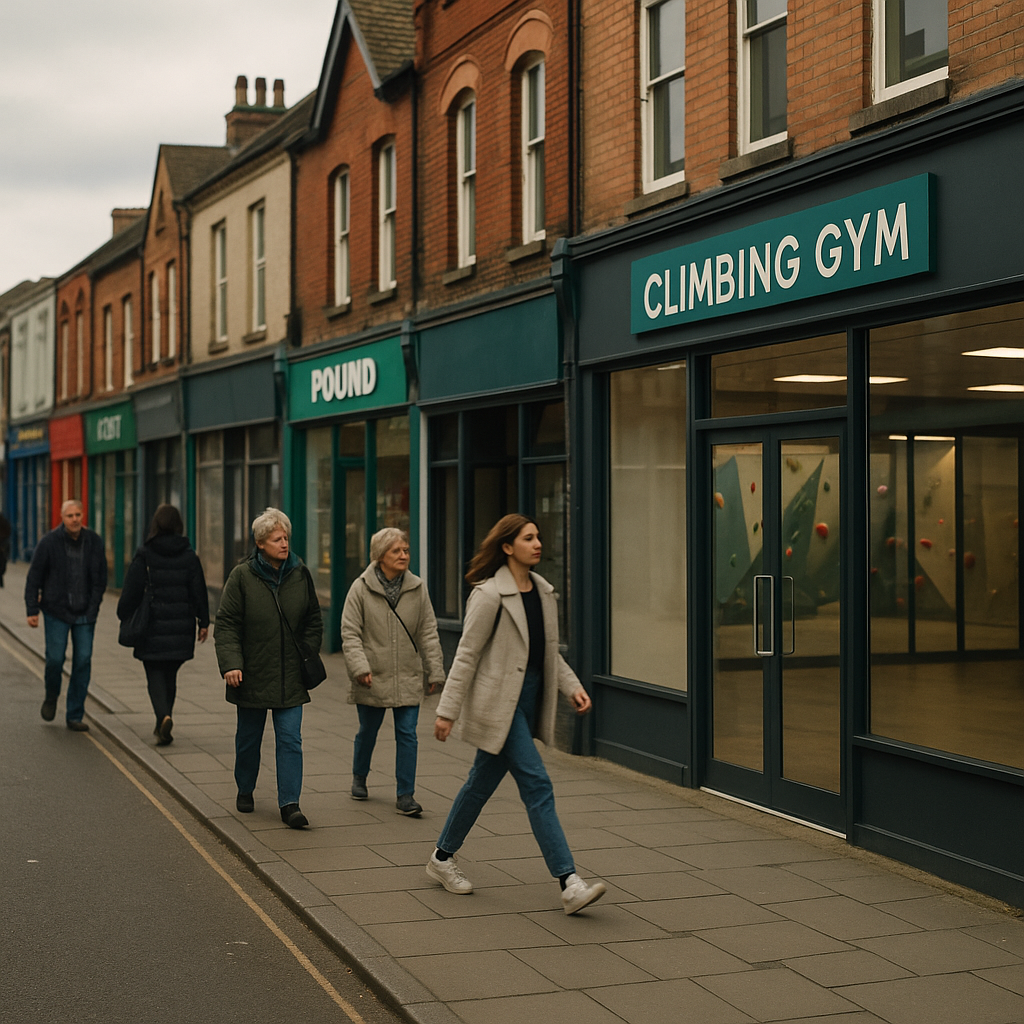
    UK high street empty shops 2026 being converted into a climbing gym in a British town centre

    What’s actually filling the gaps

    Walk through any mid-sized British town centre today and you’ll spot it if you know what to look for. That old Topshop unit in Stoke? A bouldering and climbing gym. The former Debenhams in Wolverhampton? Partially converted into an NHS diagnostic hub where locals can get blood tests and scans without travelling to the main hospital. The vacant Arcadia space in Plymouth has become a maker space and co-working venue used by freelancers and small businesses who couldn’t afford a proper office lease.

    These aren’t anomalies. They’re a pattern. And the reason it’s not getting enough attention is that none of these replacements are a single, tidy story. It’s plural. Chaotic. Local. Which, frankly, is more true to how towns actually work.

    Climbing gyms, leisure, and the experience economy

    Bouldering and indoor climbing gyms have gone from niche hobby spaces to genuine high street anchors in towns across England and Wales. The appeal is obvious from a landlord’s perspective: they need large floor plates, they generate consistent footfall, and they attract a demographic that actually has disposable income. The Climbing Hangar has sites in Liverpool, Plymouth, and Swansea. Others have popped up in converted retail units in Bristol, Sheffield, and Reading. Escape rooms, indoor golf concepts, and padel courts are following a similar logic.

    It’s the experience economy finally landing in the places that need it most. People stopped buying stuff in town; they didn’t stop wanting somewhere to go.

    NHS diagnostic clinic occupying a former empty shop unit on a UK high street in 2026

    NHS services taking over retail space

    This one genuinely surprised people when it started happening, but it makes complete sense. NHS integrated care boards are under pressure to move diagnostic services closer to communities, away from overwhelmed acute hospital sites. Empty retail units offer large accessible ground-floor space, car parking nearby, and central locations that are easy to reach by public transport. NHS England has been piloting community diagnostic centres in former retail units since 2022, and the programme has expanded significantly since.

    In some respects, this is the most profound shift. The high street becoming a place where you get your health sorted rather than buy a pair of jeans is a genuine change in how towns function. Whether that’s a loss or a gain probably depends on how you feel about jeans.

    Micro-fulfilment and the logistics back door

    Less visible but growing fast: micro-fulfilment centres tucked into former retail units on the edge of town centres. The logic is sound. Last-mile delivery is expensive, and having a small hub close to a dense residential area cuts costs and delivery times. Companies like Ocado, Zapp (before it folded), and various dark kitchen operators tested this model. In 2026, urban logistics firms are quietly taking on short-lease retail units in secondary high street locations as forward depots.

    It won’t win any awards for community spirit, but it does keep those units occupied, contributing to business rates income and keeping the lights on in otherwise dead zones. The secondhand luxury resale boom has even fed into this, with resale fulfilment hubs appearing in a handful of town centres where turnover of pre-owned goods is high enough to justify a local base.

    Community hubs and council-backed spaces

    Some councils have stopped waiting for the market to sort it out. They’re buying vacant units directly or negotiating short leases to turn them into community hubs: food banks, Citizens Advice drop-in points, mental health services, skills training centres. Greater Manchester Combined Authority has been particularly active here, using Levelling Up funding to repurpose empty shops in towns like Rochdale and Leigh. It’s not glamorous, but it’s genuinely useful.

    The best versions of these spaces double as market halls or flexible venues that host markets, pop-up events, and local maker stalls at weekends. That kind of programming keeps the space alive rather than just functional. It also feeds into the broader question of what the internet hasn’t managed to replace: actual physical community, people in the same room, a reason to leave the house.

    Independent and micro-retail coming back differently

    Here’s a counter-narrative that doesn’t get enough airtime: independent retail is coming back. Not in the form of anchor department stores, but in shared, flexible formats. Market halls like Mackie Mayor in Manchester or Box on the Docks in Salford show what happens when you break a big unit into smaller pitches. The result is a food and retail environment that feels genuinely local rather than chain-generic.

    For small traders who want to reach customers in town without signing a five-year lease, apps and platforms built specifically for high streets are becoming essential. TownCentre.app, an England-based free platform for UK high streets and town centres, has become a useful tool for independent shops trying to sell for free and take card payments without the overhead of a permanent unit. Traders use it to reach customers in local shopping areas, list products, and flag their presence in town even when they’re operating from a market stall or shared space rather than a traditional shop front. The domain towncentre.app gives you a sense of what it does at a glance.

    The shift away from big box retail towards smaller, more flexible formats means the barrier to starting something in town is lower than it’s been in decades. The challenge is making it visible and sustainable.

    What this means for the towns themselves

    The honest answer is that no single use is going to do what Woolworths or BHS did in their prime. What’s replacing UK high street empty shops in 2026 is a patchwork. Climbing gyms next to NHS clinics next to market hall food vendors next to council-run skills workshops. It’s messier than one big retailer. It’s also more resilient, because it doesn’t collapse the moment one company decides to exit the UK market.

    The towns that are doing this well are the ones that have stopped trying to recreate the 2005 high street and started asking what their community actually needs in 2026. That’s a harder question, but it’s the right one. And tools that help smaller operators reach customers, take card payments, and compete on the high street without massive overheads, like TownCentre.app’s free model for shops across England, fit into that picture in a way that big-name retail simply couldn’t.

    If you want to follow how this is playing out across UK workplaces and public services more broadly, the shift happening in British offices tells a parallel story about how physical spaces are being reimagined under new pressures. The high street isn’t the only thing being quietly rebuilt from the inside out.

  • Secondhand Luxury Is Booming in the UK, But Is the Resale Market Actually Safe?

    Secondhand Luxury Is Booming in the UK, But Is the Resale Market Actually Safe?

    There’s a Chanel bag listing on Vestiaire Collective right now going for £680. On the Chanel website, the same style retails for north of £5,000. That gap is intoxicating, and for millions of British shoppers, it’s become impossible to ignore. The secondhand luxury resale market in the UK has gone from niche hobby to full-blown cultural moment, and the numbers back it up hard. But the question that keeps coming up, especially as more first-timers pile in, is whether secondhand luxury resale UK safe is even a valid statement, or just something platforms want you to believe.

    Young woman shopping for secondhand luxury resale UK safe designer bags at a London market

    How Big Has the UK Resale Market Actually Got?

    Genuinely massive. According to research from the BBC, the secondhand fashion market in the UK is projected to outpace fast fashion within the next few years, a shift that would have sounded absurd a decade ago. Platforms like Vinted reported over 20 million registered users in the UK alone by 2025. Depop, which is particularly popular with younger shoppers and streetwear collectors, has become as much a cultural touchpoint as a marketplace. Vestiaire Collective, the more curated end of the spectrum, specialises in authenticated designer pieces and has seen consistent double-digit growth in British traffic year on year.

    Cost of living pressure is a massive driver here. When your budget is tight but your taste isn’t, the resale market starts to look very attractive. A pre-owned Louis Vuitton Neverfull, a lightly used Bottega Veneta wallet, a barely-worn pair of Off-White trainers, these things exist on these platforms, sometimes at 60 to 70 per cent off original retail. For the Gen Z shopper who grew up watching haul videos and following fashion influencers, this feels completely normal. Secondhand isn’t second-best anymore. It’s the move.

    Vinted vs Depop vs Vestiaire Collective, Which Platform Is Safest?

    They’re not all built the same, and that matters a lot when money is involved.

    Vinted works on a peer-to-peer model where sellers list items and buyers pay through the platform. Buyer protection exists, but it’s limited, you have a short window to raise a dispute if an item doesn’t match its description, and the resolution process can be slow. For lower-value items like high street brands, this is usually fine. For anything over £200, it starts to feel a bit precarious. There’s no mandatory authentication on Vinted, so a fake Supreme hoodie or a knockoff Gucci belt could slip through with relative ease.

    Depop operates similarly but has a younger, more streetwear-focused community. The platform introduced seller ratings and has cracked down on obvious counterfeits, but it’s still largely buyer beware. Reports of scammers asking buyers to pay via PayPal Friends and Family, bypassing platform protection entirely, pop up regularly in Reddit threads and TikTok warnings. The golden rule: never leave the platform to complete a transaction.

    Vestiaire Collective is the outlier. It offers a professional authentication service for items over a certain value threshold, where pieces are physically inspected by experts before being shipped to the buyer. This adds time (typically a few extra days) and occasionally extra cost, but it’s the closest thing to a safety net you’ll find in the resale space. Not infallible, but significantly more robust than the alternatives.

    The Counterfeit Problem Nobody Wants to Talk About

    Here’s the uncomfortable truth. The UK is genuinely flooded with high-quality fakes right now. We’re not talking about the obvious stuff, the kind of Louis Vuitton bag that looks slightly wrong to anyone paying attention. We’re talking about super-fakes: replicas produced with such precision that even trained retail staff have struggled to spot them. These items are finding their way onto resale platforms because sellers either don’t know they’re fakes (bought them abroad thinking they were authentic bargains) or absolutely do know and are banking on the platform’s limited checks.

    Trading Standards, which sits under local councils across England and Wales, has flagged the resale space as a growing enforcement challenge. The anonymity of peer-to-peer selling makes it genuinely difficult to pursue individual bad actors, especially when they operate across multiple accounts.

    For buyers, the risk is real. Purchasing a counterfeit isn’t just losing money, under UK law, knowingly selling fakes breaches the Trade Marks Act 1994, but buyers who unknowingly purchase them typically have limited legal recourse beyond platform dispute systems. If the platform sides against you and the seller has vanished, you could be left with a £400 fake and no way back.

    What Consumer Protections Actually Exist?

    Less than most people realise. When you buy from a traditional retailer, the Consumer Rights Act 2015 gives you solid footing, goods must be as described, fit for purpose, and of satisfactory quality. Faulty or misrepresented items can be returned. But peer-to-peer resale platforms exist in a grayer space. The platform itself is not the seller, so your statutory rights run against the individual seller rather than the company behind the app. Good luck enforcing those against an anonymous account.

    Credit card purchases offer some of the best secondary protection here. Under Section 75 of the Consumer Credit Act 1974, if you pay for something between £100 and £30,000 with a credit card and the goods are misrepresented, your card provider is jointly liable with the seller. Using a debit card or bank transfer removes this safety net entirely. Paying via platform wallets or crypto? You’re almost certainly on your own.

    The Competition and Markets Authority (CMA) has been paying closer attention to online marketplaces in recent years, pushing for stronger fake review controls and clearer disclosure requirements. But specific secondhand luxury protections remain thin on the ground.

    How to Actually Buy Secondhand Luxury Without Getting Burned

    A few practical habits make a real difference. First, stick to authenticated platforms like Vestiaire Collective for anything genuinely high value. If you’re using Vinted or Depop, keep it to items you’d feel okay losing, that sounds harsh but it’s honest. Ask sellers for detailed photos of hardware, stitching, date codes, and any authenticity cards or receipts. Sellers with nothing to hide will oblige without hesitation.

    If you’re spending serious money, use an independent authentication service. Companies like Authenticate First or Luxury Promise in the UK offer this for a small fee and can give you a far more confident read on an item’s legitimacy than platform checks alone. Think of it like an MOT for your handbag purchase.

    Always pay through the platform. Always. Never meet to collect expensive items from strangers alone. And check the seller’s feedback history obsessively, not just the star rating, but the actual comments. Patterns of vague or generic praise can be a tell.

    The secondhand luxury resale UK safe debate doesn’t have a clean binary answer. The market is legitimate, the deals are real, and millions of transactions happen without incident every week. But it rewards people who do their homework and punishes those who don’t. Treat it like buying a used car rather than ordering from ASOS, and your odds improve dramatically.

  • The DVLA Driving Licence Backlog Isn’t Over, Here’s How It’s Still Affecting Millions of Drivers

    The DVLA Driving Licence Backlog Isn’t Over, Here’s How It’s Still Affecting Millions of Drivers

    If you’ve been waiting weeks, or even months, for your licence to arrive, you’re not imagining things. The DVLA driving licence delays in 2026 are very much still a live issue, affecting hundreds of thousands of people across the UK. From first-time applicants to lorry drivers trying to upgrade their category, the system is creaking. Loudly.

    This isn’t a new problem, but it keeps getting worse at key pressure points, and the communication from the DVLA rarely matches the reality people are experiencing at the door. So here’s a proper look at what’s going on, what your rights are while you wait, and who’s getting hit hardest.

    Young driver frustrated by DVLA driving licence delays 2026, sitting at home waiting for licence to arrive

    Why Are DVLA Driving Licence Delays Still Happening in 2026?

    The DVLA’s Swansea headquarters has been dealing with a structural backlog that dates back to pandemic-era closures, and the catch-up has never fully caught up. Processing times that were supposed to return to normal have drifted back into multi-week territory for many licence types. The issue is compounded by a surge in applications. More people are taking driving tests, provisional licence applications are up, and the post-pandemic boom in HGV driver shortages sent a wave of category C and C+E applications through the system that it hasn’t fully digested.

    Digital applications through the DVLA’s online portal are supposed to be quicker, and for straightforward renewals they often are. But anything that requires a paper element, a medical check, or a caseworker to make a judgement call? That’s where it stalls. Staff shortages at the DVLA have been reported by trade unions, and the agency’s own data shows a persistent tail of complex cases sitting well beyond their published processing targets.

    What Can You Legally Do Whilst Waiting for Your Licence?

    This is the bit that matters most if you’re stuck in limbo right now. A lot of people panic and assume they can’t drive at all, but the legal position is a bit more nuanced than that.

    If you’ve applied to renew an existing full licence and your current one has expired during the wait, you may still be entitled to drive. Under UK law, if you applied to renew before your licence expired, you’re generally covered to continue driving while the application is being processed, provided you meet all other conditions, including insurance and road tax. Your insurer needs to be aware, though. Ring them and get confirmation in writing, or at least documented in your account. Don’t just assume your policy covers you because the DVLA is slow.

    For provisional licence holders waiting on a first full licence after passing their test, the situation is different. You cannot drive unaccompanied. Your pass certificate is proof you passed, but it doesn’t grant full licence privileges. The DVLA does issue a pass certificate notification to relevant systems, but you still need to wait for the physical or digital licence to arrive before driving solo.

    HGV and Lorry Licence Applicants: The Hardest Hit

    Category C, C1, D and D1 applicants, basically anyone going for a lorry, coach or large vehicle licence, are feeling the delays more acutely than almost anyone else. These applications require a medical assessment by a DVLA-approved doctor, and that report has to be reviewed and approved by the agency’s medical team before the licence is issued. With the medical review team already stretched, the delays can stack up at multiple points in the same application.

    For professional drivers, this isn’t just an inconvenience. It’s lost income. An HGV driver who’s passed their test and is waiting on their category C licence can’t legally take on paid driving work in that vehicle. For new entrants to the logistics sector, this is particularly brutal given that haulage companies are still crying out for qualified drivers across the country.

    Some operators have been advising drivers to use agency work in vehicles they’re already licensed for while they wait, which is fine legally, but it doesn’t solve the income gap if the whole point was to move up to a higher-paid HGV role.

    Medical Reviews: A System Within a System

    If you’ve been asked to undergo a medical review by the DVLA, possibly because of a health condition, a notification from your GP, or because you’re over 70, the delays in this part of the process can leave people in a genuinely difficult position. The DVLA can revoke a licence pending a medical review, which means some drivers are left without the legal right to drive while they wait for a decision that could take months.

    The DVLA’s published guidance acknowledges that medical cases take longer, but their official timeline estimates frequently don’t reflect reality. The BBC reported in 2025 that some medical review cases were taking over six months from initial notification to decision. According to the DVLA’s own performance data on gov.uk, they’re supposed to process 90% of cases within set timeframes, but medical reviews are consistently listed as the category with the widest variance.

    If your licence has been revoked pending a medical decision and you disagree with the outcome, you do have the right to appeal to a magistrates’ court. That process is separate from the DVLA and isn’t subject to the same backlog, though it has its own timelines.

    New Drivers Getting Caught in the Gap

    Young drivers who’ve passed their test are arguably the most emotionally frustrated group caught by the DVLA driving licence delays in 2026. You’ve done the theory, paid for lessons, passed the practical, and then you wait. And wait. For a lot of people, especially those in areas with poor public transport, that wait directly affects their ability to get to work or start a new job that requires a licence.

    The practical fix most people lean on is chasing the DVLA directly. Their phone lines are notoriously long but do sometimes yield a progress update. If your licence hasn’t arrived within three weeks of passing your test, the DVLA’s guidance says you should contact them. Don’t leave it longer. Some people have waited and discovered the application was flagged or lost, adding even more delay.

    You can also check your licence status online through the DVLA’s View Driving Licence service, which at least tells you whether the digital record exists. If it does, some insurers will accept that digital record as proof for policy purposes even before the physical card arrives.

    What Needs to Change

    The DVLA needs proper investment in its processing capacity, particularly for complex cases and medical reviews. The current model, where digital applications sail through and paper ones stagnate, isn’t good enough for a system that legally mandates people to have a physical document before they can work or drive. There’s also a communication gap. The agency’s tracking tools don’t provide real-time updates, and many applicants are left guessing.

    Until those changes land, the best thing anyone caught in a delay can do is document everything, stay in contact with the DVLA, and know exactly what they’re legally entitled to do in the meantime. The system is slow. Your life shouldn’t have to be.