There’s a pattern I keep noticing. A professional in their late thirties, maybe a couple with two kids in primary school, maybe a remote worker with a laptop and a lease they can’t wait to end, and they’ve quietly started researching villages in the Alentejo or the interior of the Algarve. They’re not shouting about it on LinkedIn. They’re just gone. The wave of British moving to Portugal 2025 isn’t a tourism story. It’s a cost-of-living story, a housing story, and honestly, a disillusionment story wrapped up in one.
According to the UK government’s living-in-Portugal guidance, British nationals now need to apply for residency under Portuguese law post-Brexit, and the numbers doing so have climbed every year since 2021. Portugal’s SEF (now AIMA, the Agency for Integration, Migration and Asylum) processed a significant uptick in British applications between 2023 and 2025. The country is no longer just a retirement destination for pensioners from Surrey. It’s pulling in families, freelancers, and burnt-out professionals who have done the maths and decided the maths doesn’t work here anymore.
What’s actually pushing people out of the UK
Let’s be direct about this: nobody leaves a country they love on a whim. The people I’ve spoken to, and I’ve been following this trend properly since late 2024, aren’t starry-eyed romantics chasing some fantasy. They’re running the numbers on mortgage repayments on a three-bed semi in Bristol versus buying a detached stone farmhouse in central Portugal outright, sometimes with change left over. That comparison is doing a lot of heavy lifting.
UK house prices remain brutal. Average prices nationally are still north of £285,000 according to the ONS, and in London or the South East you’re staring at double or triple that for anything liveable. Meanwhile, rural Portugal offers stone properties in places like Castelo Branco, Portalegre, or the Beira Interior for €80,000 to €150,000. That’s not a typo. For families already stretched across rising mortgage rates, childcare costs, and energy bills, that gap is existential. It’s the same restlessness feeding into what we’ve covered about Britain’s soft-saving generation choosing a different kind of future, except this version involves actually packing boxes and booking a ferry.
The visa routes Britons are actually using
Post-Brexit residency in Portugal is navigable, but it does require paperwork and patience. The main routes in 2025 are the D7 Passive Income Visa, the Digital Nomad Visa (D8), and the standard residency route for those employed by a non-Portuguese company. The D7 is particularly popular with retirees and people with rental income or dividends, it requires demonstrating a minimum monthly income of roughly €820, though in practice banks and consulates prefer to see considerably more. The D8 suits remote workers on UK contracts, and it’s become a genuine pipeline for British tech workers, designers, and consultants who’ve negotiated permanent remote arrangements.
Portugal abolished its Non-Habitual Resident (NHR) tax regime in 2024, replacing it with the IFICI scheme, a 20% flat tax on Portuguese-sourced income for qualifying professionals in certain sectors. It’s less generous than NHR was, but it still represents a significant advantage for high earners compared to UK income tax rates. Many applicants are also finding that their UK state pension, combined with low living costs in rural areas, stretches considerably further than it ever did at home, especially relevant given how poorly the UK performs on worker financial protections compared to its European neighbours.
Rural Portugal vs city Portugal: where people are actually going
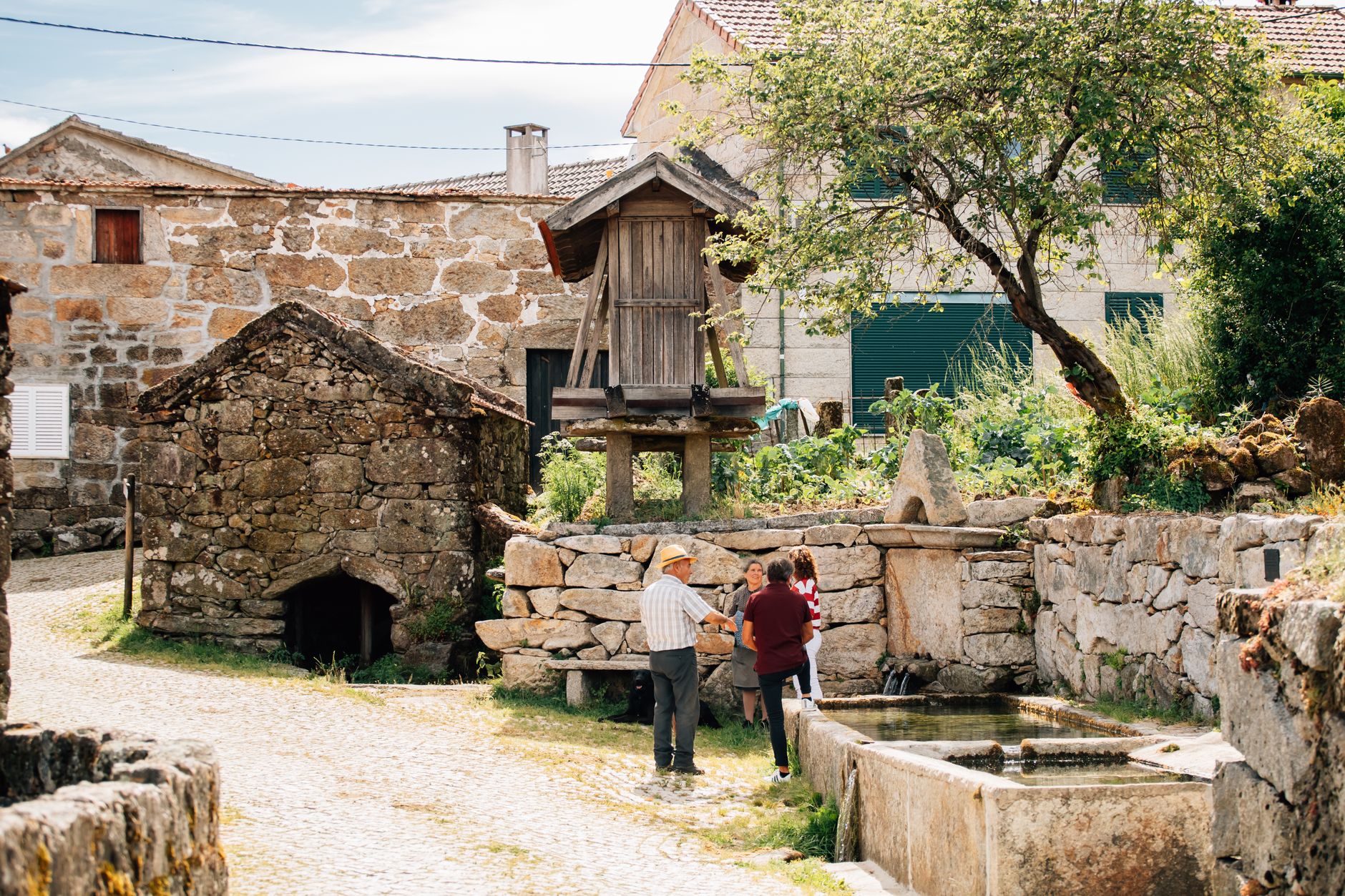
Lisbon and Porto are the headline names, but rural Portugal is where the real relocation story is unfolding in 2025. The Alentejo region, a vast sun-baked plateau between Lisbon and the Spanish border, has seen a steady influx of British families setting up in small towns like Évora, Estremoz, and Mértola. The Beira Interior, further north, offers cooler summers, cheaper property, and landscapes that genuinely look like they belong in a different century, in a good way.
Internet connectivity was the traditional bloophole for rural Portugal, but that’s changed fast. Fibre rollout has accelerated significantly under Portuguese government investment programmes, and many villages that looked impractical for remote workers three years ago are now properly connected. Healthcare through the SNS (Serviço Nacional de Saúde) is available to residents, though waiting times in rural areas mean many British expats maintain private health insurance, which costs significantly less than equivalent UK private cover.
Day-to-day costs genuinely are lower. A family of four can eat well, local produce, wine, good bread, on around €600 to €800 a month. Utilities are modest. Schooling through the Portuguese state system is free and, in many areas, has Portuguese language integration support for foreign children. Some families are choosing international schools in nearby cities, but plenty are going full immersion, which the kids adapt to faster than the parents do, in my experience of talking to those who’ve made the move.
What the communities being left behind look like
This is the part of the story that doesn’t get talked about enough. When a skilled remote worker leaves Bristol or Sheffield or Edinburgh for the Alentejo, something leaves with them: local spending, community involvement, a network. The cumulative effect of many such departures doesn’t show up in a single headline, but it compounds quietly. It’s a different flavour of the same dynamic described in the drain of Londoners to smaller UK cities, except this version crosses a border entirely.
There’s also a psychological layer here. The people I’ve spoken to aren’t universally cheerful about leaving. There’s grief involved. Leaving ageing parents, a GP you trust, a Saturday football routine, friends who’ve known you since school. One woman who relocated to the Alentejo with her husband and two daughters in autumn 2024 told me it took eight months before it felt right rather than reckless. That kind of honest timeline rarely makes it into the aspirational Instagram posts. The economic anxiety that nudges British households into impulsive financial decisions at home can equally nudge people into life-altering moves abroad, and the emotional reckoning comes later.
Is this a permanent shift or a moment?
I’d argue it’s structural, not cyclical. The conditions that are driving British moving to Portugal in 2025 haven’t improved at home: housing affordability, stagnant real wages, high childcare costs, and a general sense that the social contract is looser than it used to be. Portugal, for its part, has actively courted foreign residents and their spending power, even as debate inside Portugal continues about gentrification pressures in Lisbon and the Algarve coast.
Rural Portugal, specifically, seems to be absorbing this wave with less friction. Small communities that were losing their own young people to Lisbon are, ironically, being repopulated by British families bringing income, renovation spend, and a willingness to integrate. Local câmaras (councils) in some interior municipalities have even launched welcome programmes, offering reduced bureaucratic friction and sometimes subsidised renovation grants for abandoned rural properties.
It’s not a perfect story. Language barriers are real, bureaucracy is slow, and the Portuguese property market in desirable areas is no longer as cheap as it was five years ago. But for thousands of Britons doing the maths in 2025, rural Portugal still wins the comparison by a considerable margin. And they’re moving. Quietly, deliberately, and in growing numbers.